About the Artist
Stephen Wessells
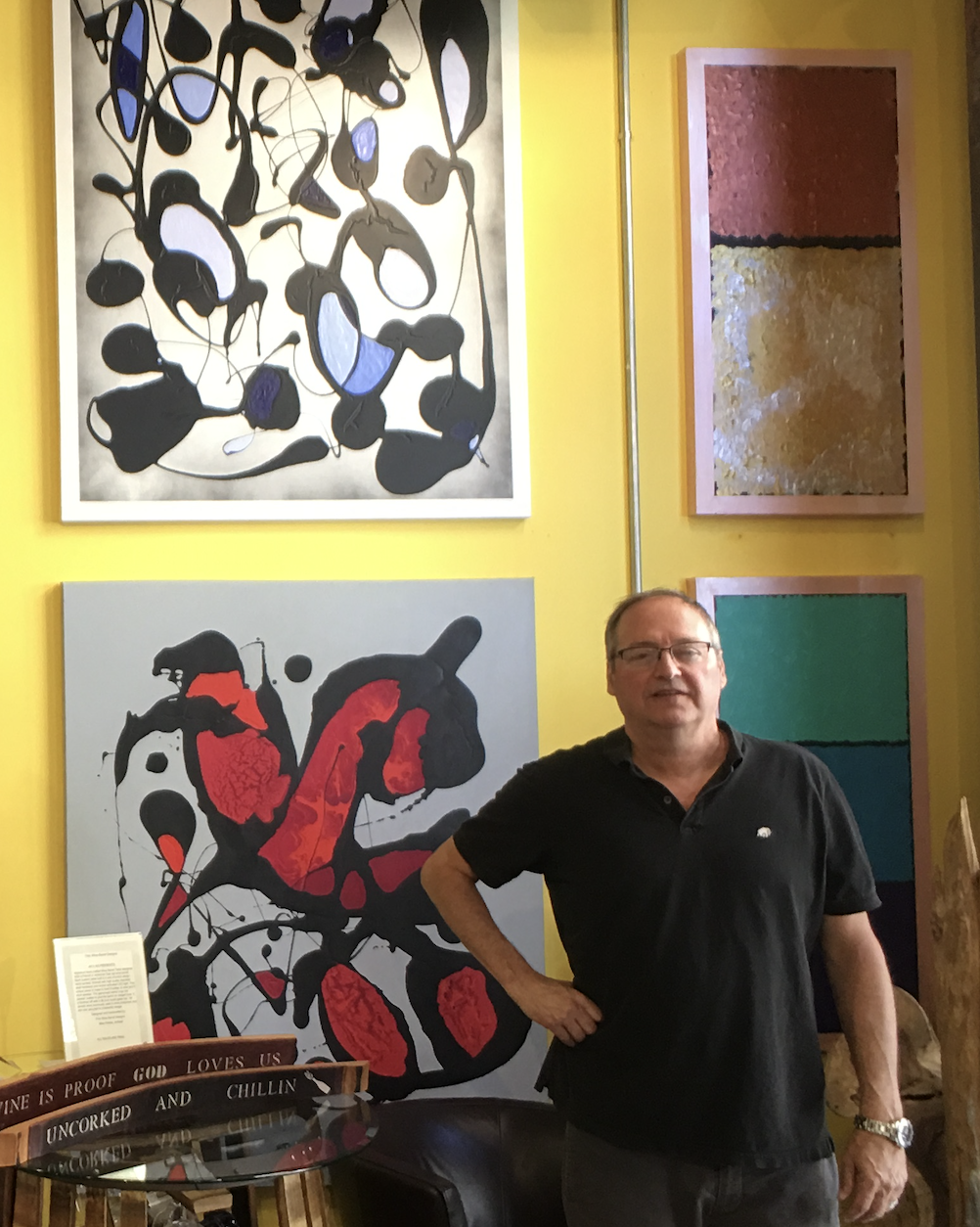
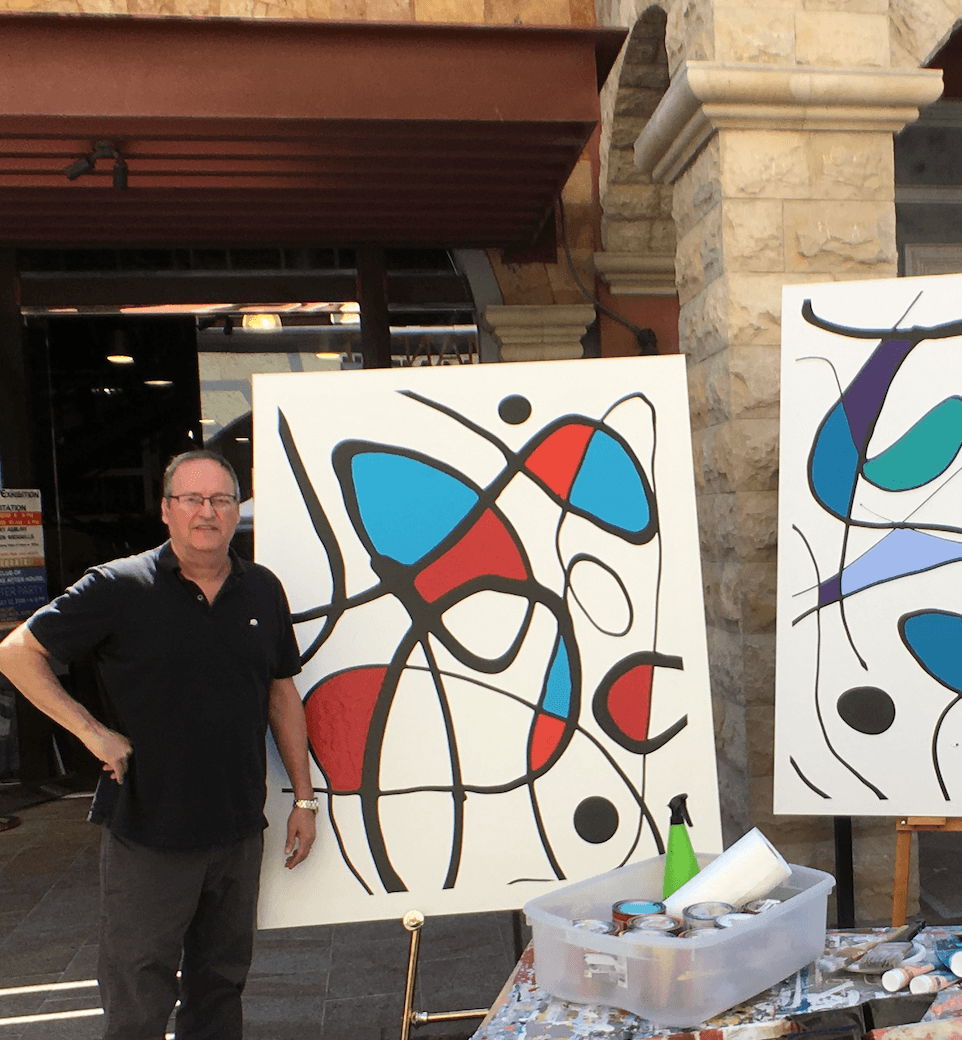
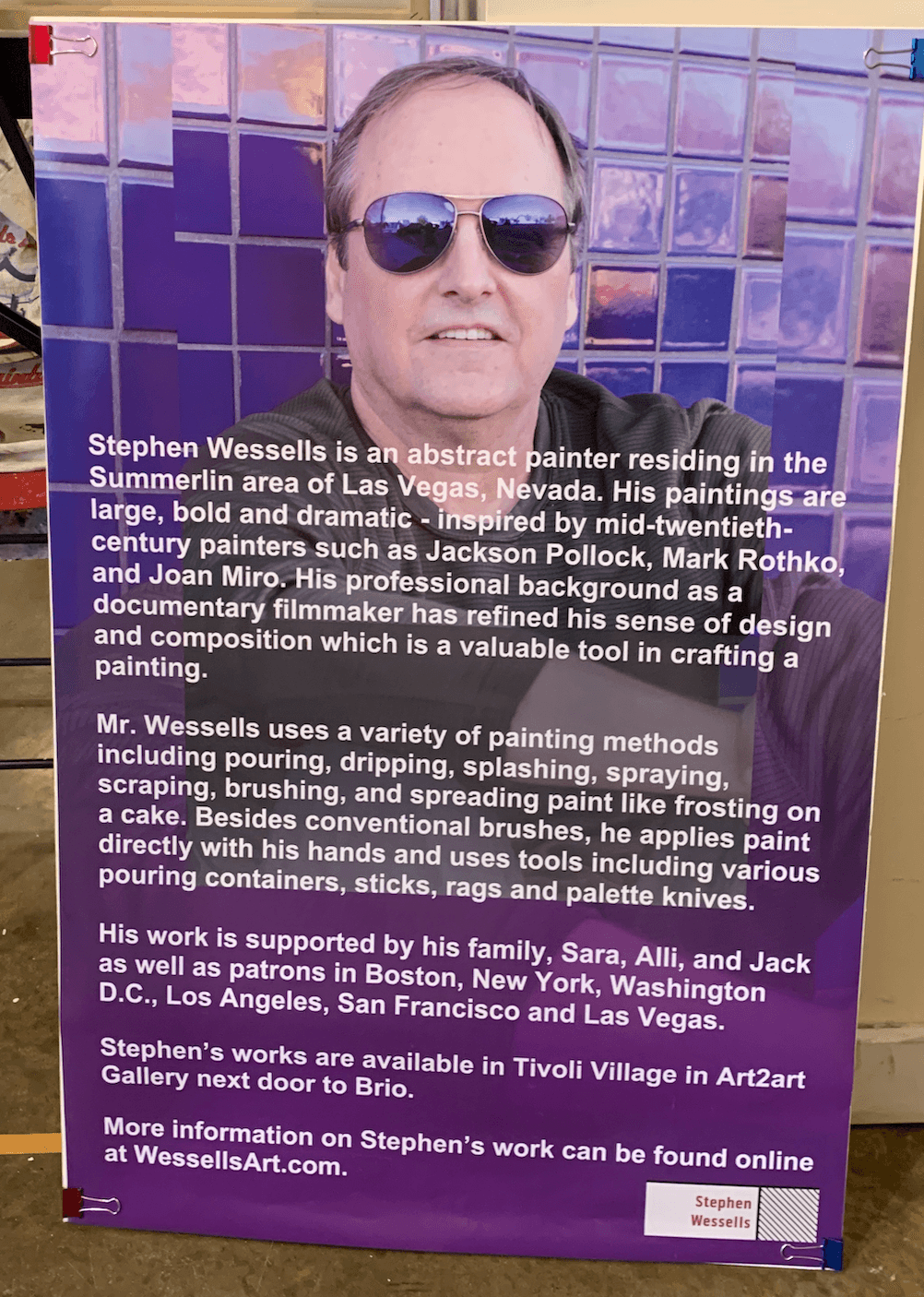
Stephen Wessells grew up in Palo Alto, California, on the Stanford University campus, in a household where making things was simply what the family did. Sports, building projects and art all shared the same table, and his parents’ enthusiasm for creating gave painting a feeling that was natural from the start. He picked up a brush in high school in the late 1970s, and the pull never really left him. After public school in Palo Alto, he studied at the University of California, earning a degree in Earth Science at UC Santa Cruz, then went on to Stanford for a master’s degree in communications through the Documentary Film and Television Program. For years his creative life ran through the camera. As a documentary filmmaker, he learned to see in frames, to build a composition, to work in the moment, and above all to sense when a piece is finished. Those lessons never left him; they simply moved from film to canvas. Today Stephen paints from a modest studio in Las Vegas, Nevada, and in recent years he has picked up the pace considerably. For him, painting taps into his deepest thoughts and memories, and he calls it “wonderful therapy for modern life.” His abstract work is loose, large and energetic, with color that fills a room. He draws inspiration from the mid-twentieth-century giants Jackson Pollock, Mark Rothko and Joan Miró, and he shares Henri Matisse’s belief that art should be restful, “like a good armchair.” Family remains at the center of his journey. His wife, Sara, and their two grown children, Alli and Jack, have been what he affectionately calls a “captive audience,” giving candid feedback on every new painting and encouraging him along the way. His paintings are completely open to interpretation, and Stephen likes it that way. What brings him the most satisfaction is the simplest thing: bringing life to dull walls through design and color.
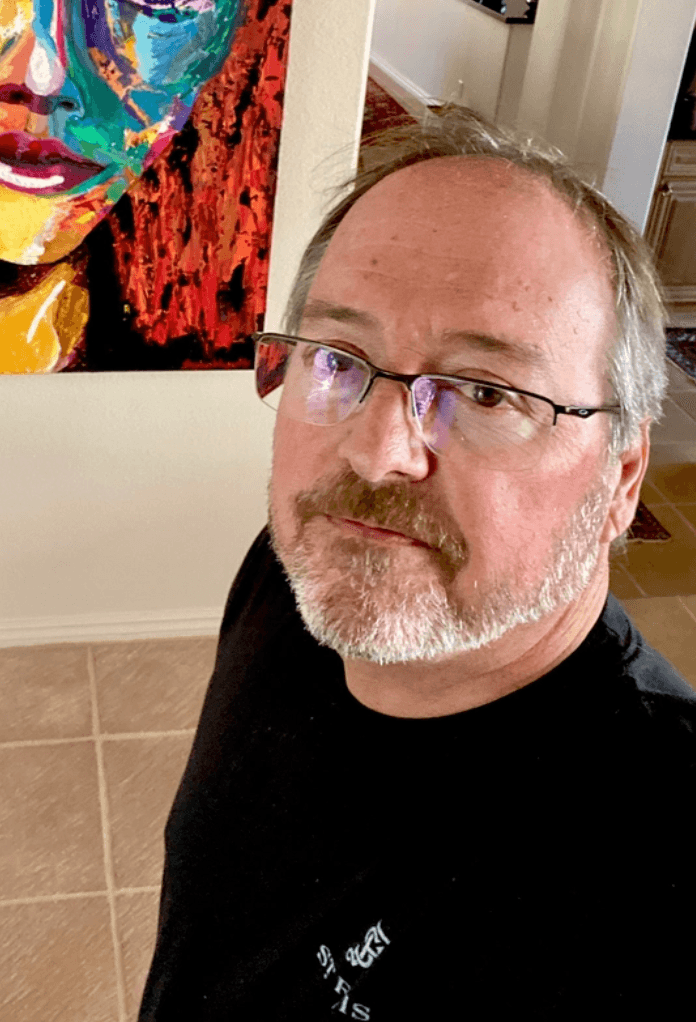
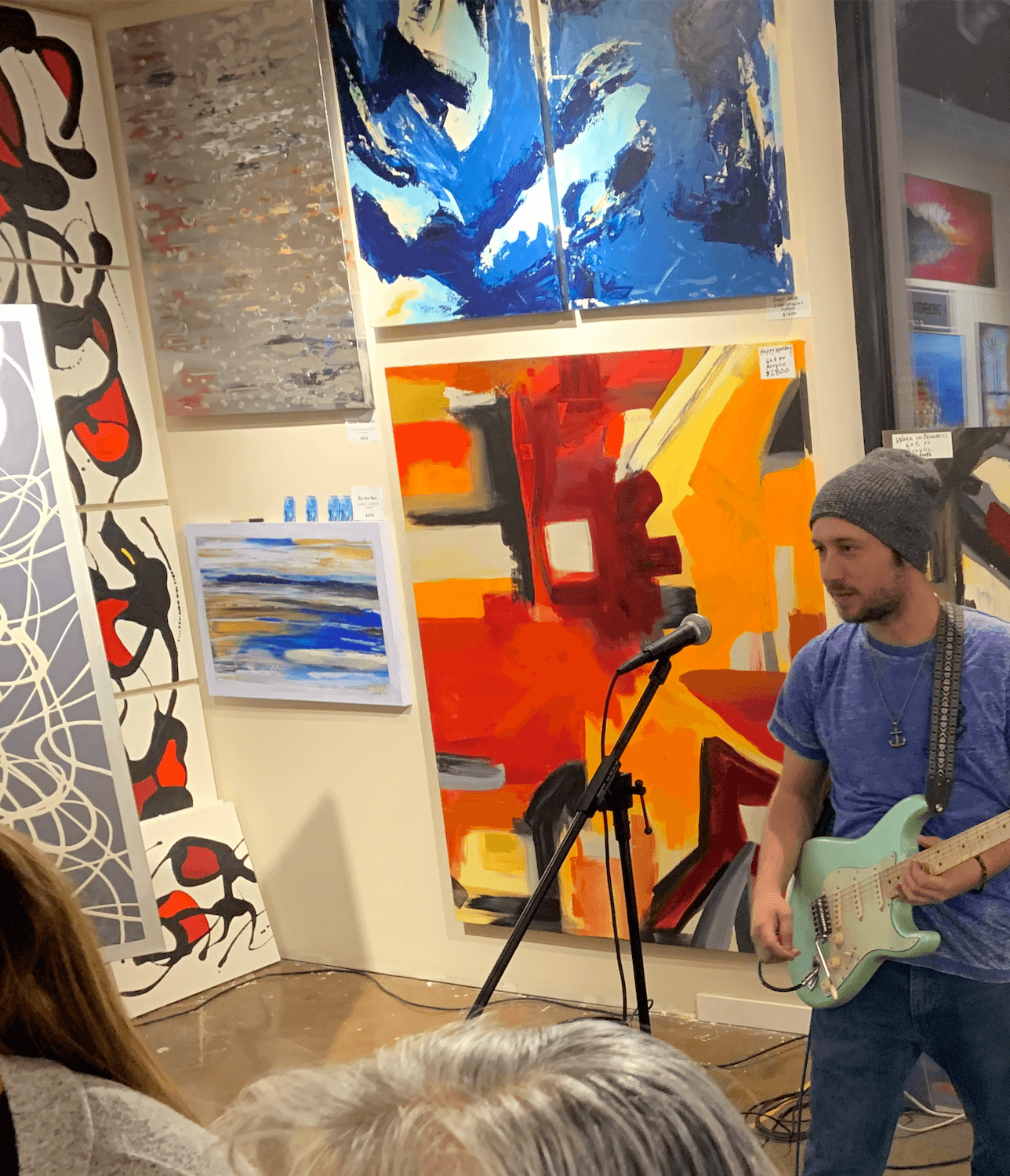
“Large, vibrant, wonderfully loose. Stephen Wessells paints big acrylic canvases driven by instinct, impulse and experience, where pours, drips and palette-knife strokes collide into color you can feel from across the room. His paintings are open to interpretation, so every viewer finds their own story in them.”
The Process
Inside the Studio
THE PAINTING PROCESS
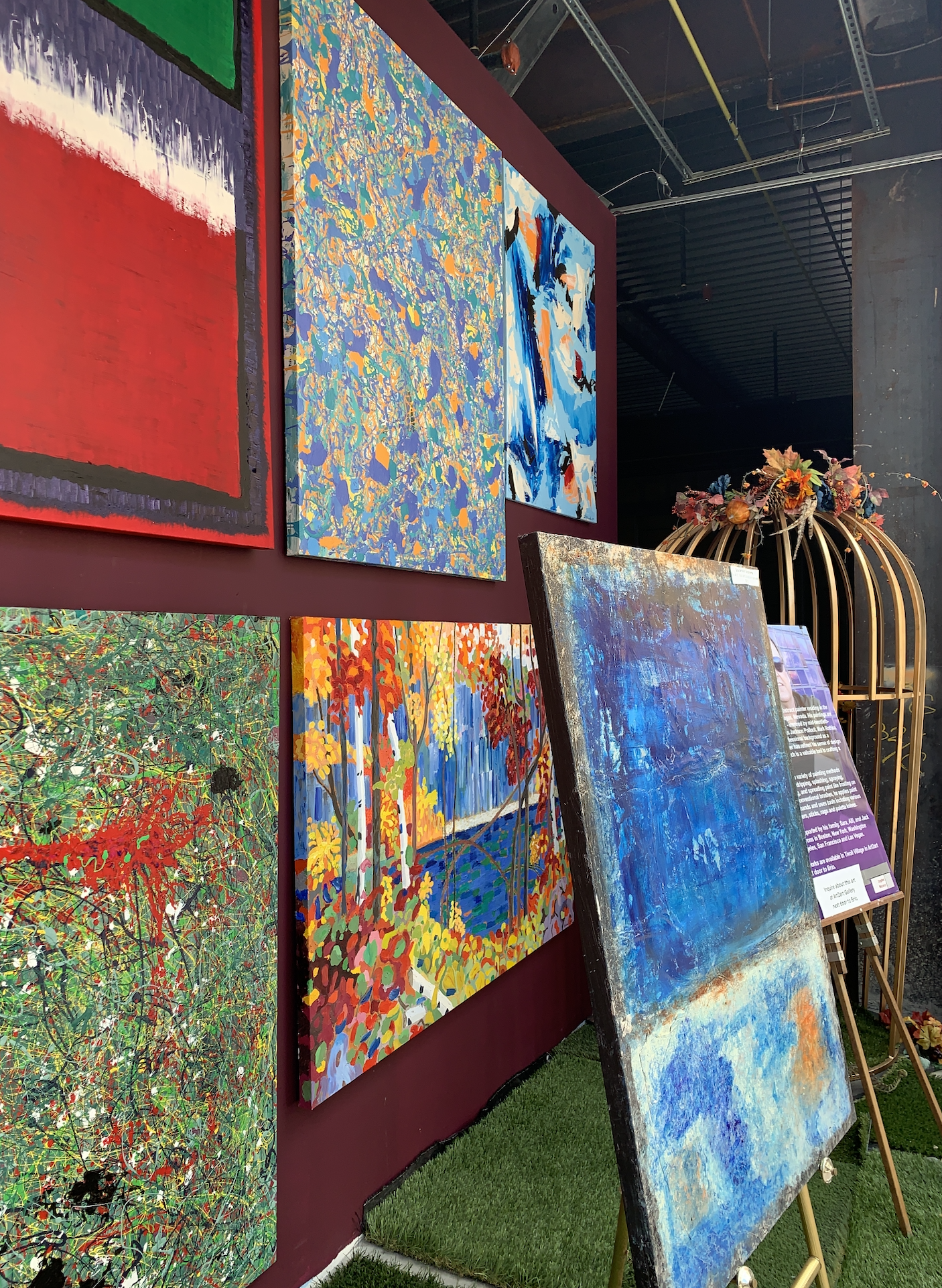
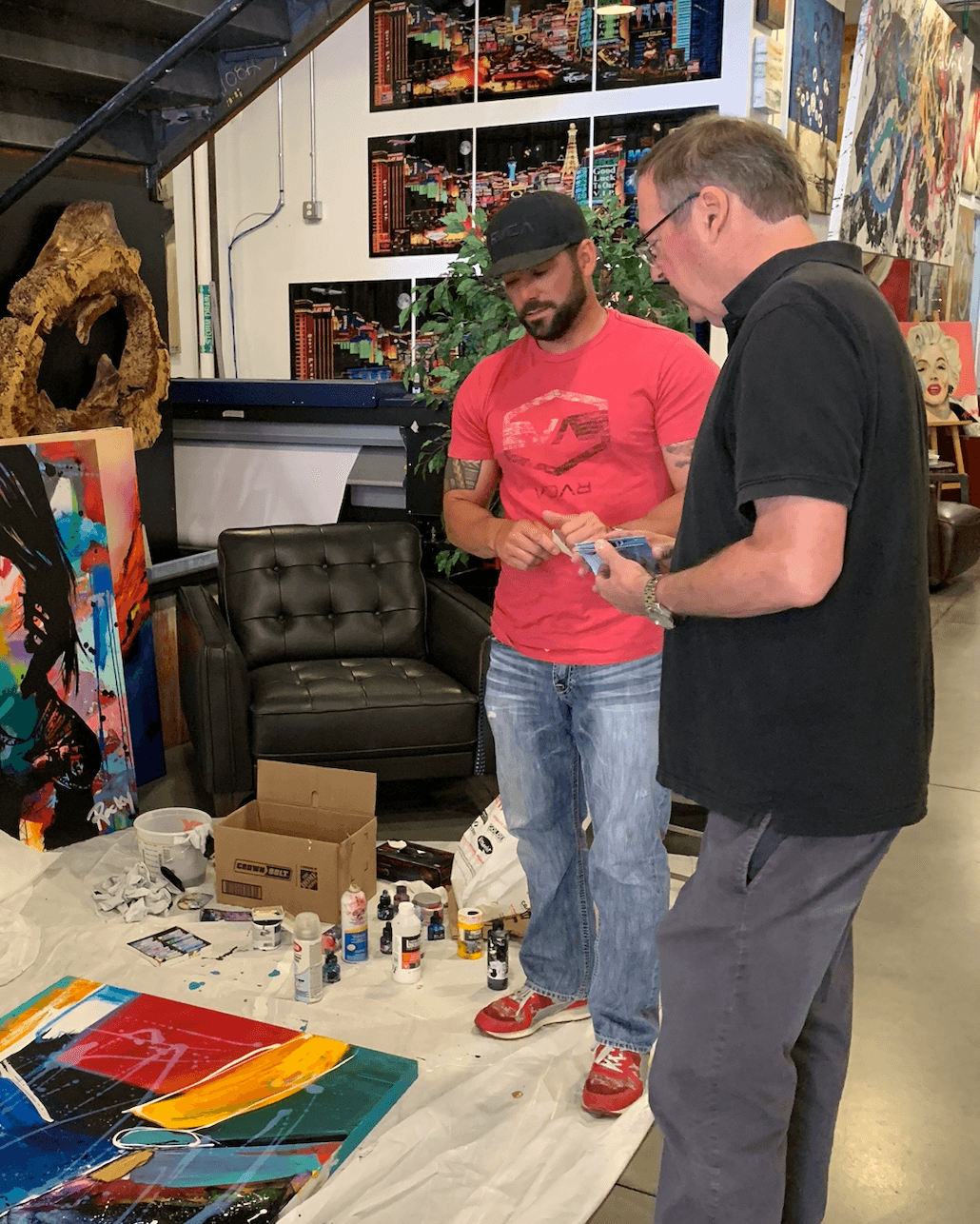
Stephen’s studio in Las Vegas is, in his own words, a modest one, but the work that comes out of it is anything but. He paints large whenever he can. A big canvas gives him room to move, and the paintings that follow are loose, lively and driven by what he calls instincts, impulse and experience. There is no rigid plan at the start. A canvas goes down, and the paint goes on in whatever way the moment calls for: poured, dripped, splashed, sprayed, then scraped back or brushed over. Sometimes he spreads it thick, like frosting on a cake. He works with conventional brushes, but just as often with pouring containers, rags, toothbrushes and his own bare hands, and a palette knife is never far away. That variety is what gives his surfaces their energy, with layers that can read as dramatic in one corner and quiet in the next. Years behind a documentary camera taught him to work spontaneously and, more importantly, to know when to stop. He trusts his eye for composition to tell him when a painting holds together and when it is finished. He leaves the meaning open to the viewer, and he is happy for people to see something different in each one. For Stephen, the process itself matters as much as the result. Painting taps into his deepest thoughts and memories, and he calls it “wonderful therapy for modern life.” When a piece leaves the studio, his hope is simple: that it brings a dull wall to life with design and color.